General Dentistry · Oral Surgery
Gentle extractions performed in-house, with a roadmap to replacement so you leave knowing exactly what comes next.
Our approach
Our first priority is always preservation. A root canal with a crown, a filling, or periodontal treatment, if any of these can save a tooth, that's the conversation we'll have first.
But when the tooth is beyond restoration, a timely extraction, followed immediately by a replacement plan, protects the surrounding teeth, prevents bone loss, and keeps your bite healthy. We handle both the extraction and the replacement consultation in our office.
When extraction is the right choice
When decay has destroyed so much tooth structure that a filling or crown can no longer provide adequate support, extraction becomes necessary.
Vertical root fractures that extend below the gumline cannot be crowned or root-canal-treated. Extraction prevents ongoing infection.
Bone loss severe enough to leave a tooth with insufficient support makes extraction and bone grafting the only viable path.
A small percentage of root-canal-treated teeth develop persistent infection that cannot be retreated. Extraction and implant placement is the next step.
Removing teeth to create space is sometimes necessary before orthodontic treatment can properly align the remaining teeth.
Wisdom teeth that lack space to erupt properly, or that are threatening adjacent tooth roots, are removed to prevent long-term damage.
Step by step
We confirm the tooth cannot be saved, evaluate the surrounding bone, and determine whether a simple or surgical extraction is required.
Local anesthesia fully numbs the tooth and surrounding tissue. We offer nitrous oxide for anxious patients. Most patients report feeling pressure but no pain.
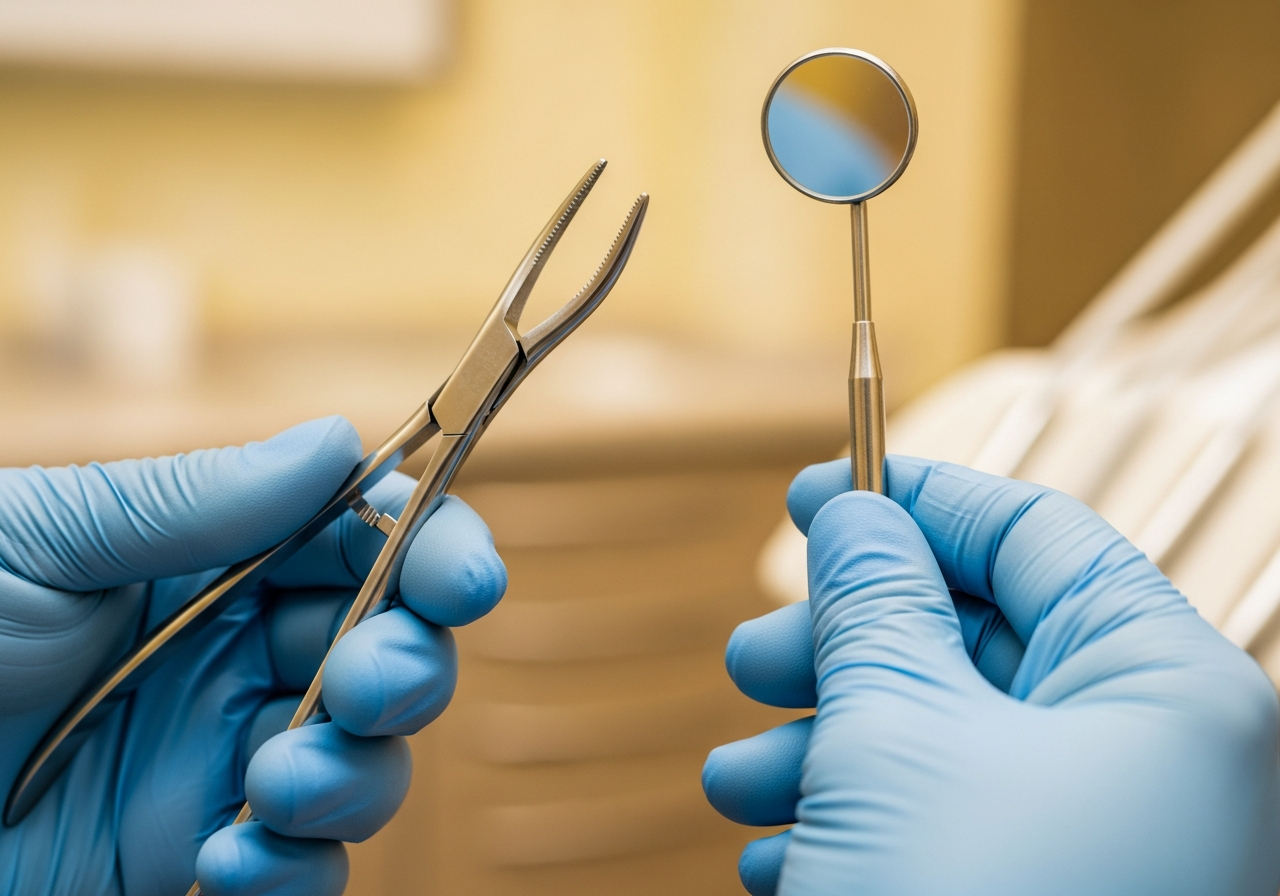
Simple extractions involve loosening and removing the tooth with forceps. Surgical extractions, for impacted or broken teeth, may require a small incision and sectioning of the tooth.
After the tooth is removed, we clean the socket, compress the tissue, and discuss bone grafting if you plan to place an implant. Grafting at the time of extraction preserves bone volume for a better implant outcome.
You leave with written aftercare instructions, appropriate prescriptions, and a clear roadmap to replacing the tooth if desired.
After extraction
An unrestored gap causes bone loss within months and allows adjacent teeth to shift. We'll discuss all three replacement paths with you before you leave.
2–6 months after extraction (bone graft may extend timeline)
The gold standard. A titanium root replacement topped with a crown, looks, functions, and feels like a natural tooth.
Learn more →6–8 weeks after healing
A porcelain crown anchored to adjacent teeth bridges the gap. Faster than an implant; doesn't require surgery.
Learn more →4–6 weeks after healing
A removable appliance that replaces one or more missing teeth. Less expensive upfront; requires removal for cleaning.
Learn more →Post-extraction care
Bite gently on gauze for 30–45 minutes to control initial bleeding
Do not rinse, spit forcefully, or use a straw for 24 hours, this can dislodge the clot
Apply a cold compress to your cheek for 20 minutes on, 20 minutes off for the first few hours
Take prescribed or over-the-counter pain relief as directed
Eat soft foods for the first 24–48 hours; avoid the extraction site
Do not smoke, it dramatically increases dry socket risk
After 24 hours, gently rinse with warm salt water several times a day
Call us if you experience worsening pain after day 3, this may indicate dry socket
Common questions
The procedure itself is performed under local anesthesia, so you should feel pressure and movement but not pain. Post-extraction soreness is normal for a few days and responds well to over-the-counter or prescribed pain relievers.
Dry socket occurs when the protective blood clot in the socket dislodges before the wound heals, exposing bone and nerves to air, food, and bacteria. Avoid smoking, spitting forcefully, and using straws for 48 hours. If you develop worsening pain after day 3, call us immediately.
For any visible tooth, yes. Missing teeth cause adjacent teeth to shift, bone to resorb, and biting forces to distribute unequally, leading to long-term problems. We'll discuss all replacement options and timelines at your extraction appointment.
Initial healing, the clot forming and tissue closing, takes 7–10 days. Full bone healing takes 3–6 months, which is why implant placement typically waits until that period is complete.
In some cases, yes. Immediate implant placement and same-day temporaries are possible for certain patients with adequate bone. We'll evaluate your eligibility during your consultation.
Service area
Schedule your evaluation
Call our Turkey Lake Road office to schedule. We'll evaluate the tooth honestly and give you every option before making any decisions.