General Dentistry · Sleep Protection
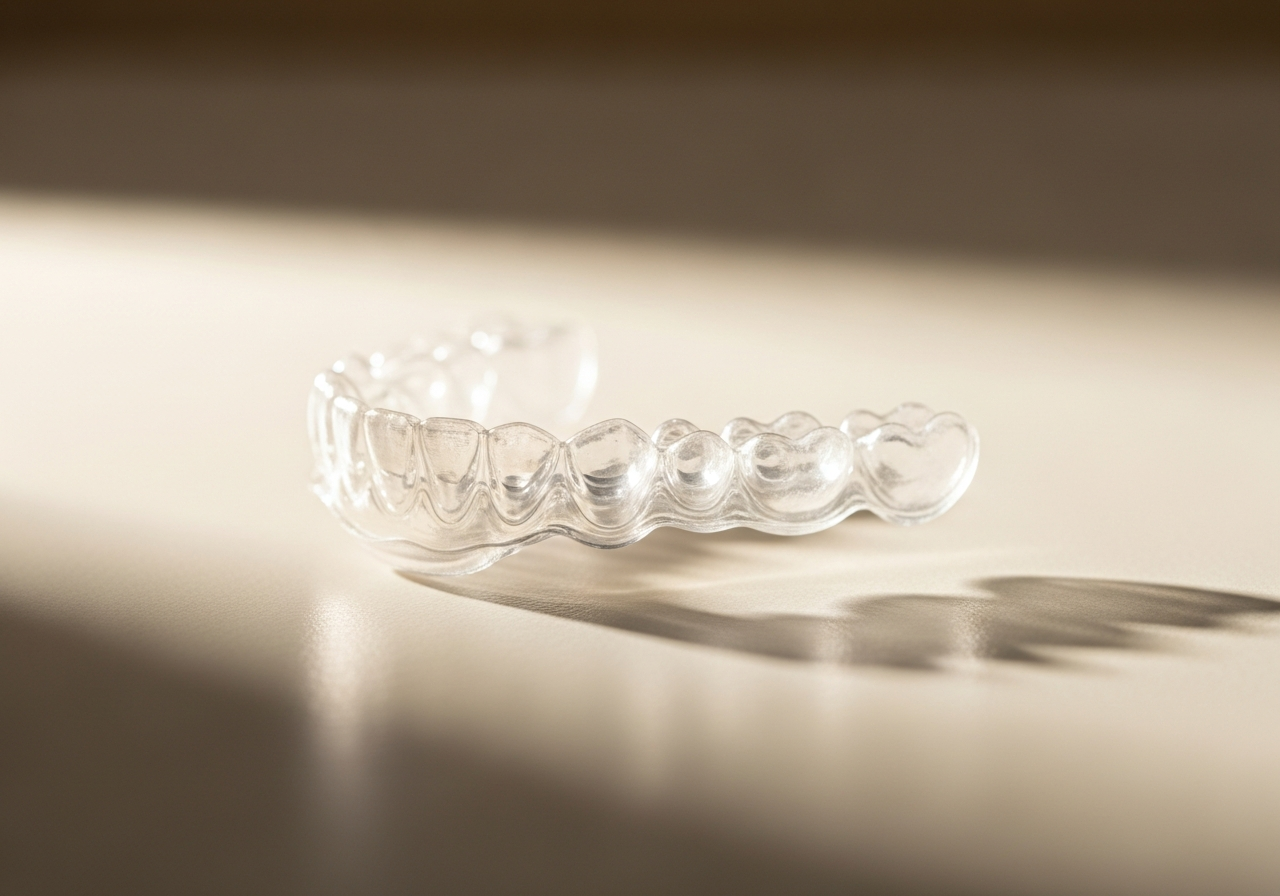
Custom night guards crafted from precise impressions protect your enamel, relieve jaw pain, and outlast anything you'll find over the counter.
The problem with grinding
Bruxism, the clinical term for grinding and clenching, typically happens during sleep, entirely outside your awareness. By the time it becomes obvious, enamel may be significantly worn, teeth cracked, and the jaw joint stressed.
A custom night guard doesn't stop grinding, that's a neurological habit, but it intercepts the force before it reaches your teeth, giving your enamel, jaw, and restorations a chance to survive the night unharmed.
Warning signs
Waking up with a sore jaw or headache
Sensitive teeth that have no obvious cause
Flat, chipped, or worn-down enamel
A partner who hears you grinding at night
Tight or fatigued jaw muscles throughout the day
Increased tooth mobility or loosening
Unexplained cracked or fractured teeth
Experiencing two or more of these? A single appointment is all it takes to evaluate your bite and protect what's left.
The real cost of untreated bruxism
Enamel doesn't regenerate, once worn away, the underlying dentin is permanently exposed.
Grinding forces can exceed 200 lbs per square inch, splitting teeth that might otherwise last a lifetime.
Chronic overuse of the jaw joint leads to clicking, locking, and chronic facial pain.
Crowns, veneers, and implants subjected to grinding forces fail years ahead of schedule.
Grinding shifts teeth laterally, placing stress on the gum attachment and driving recession.
Custom vs. over the counter
| Feature | Custom (Venetian Pointe) | Over the Counter |
|---|---|---|
| Fit | Precise impression of your teeth | One-size generic tray |
| Material | Lab-grade hard/soft dual laminate | Cheap thermoplastic |
| Comfort | Stays in place all night | Bulk causes gagging; often removed |
| Protection level | Absorbs and redistributes full force | Minimal, may shift force unpredictably |
| Lifespan | 3–5 years with proper care | Weeks to a few months |
| Effect on bite | Balanced; does not alter occlusion | May worsen bite alignment over time |
The process
We evaluate your bite, existing enamel wear, jaw joint health, and any existing restorations to confirm a night guard is the right solution.
Digital or traditional impressions capture every contour of your upper and lower arches, the foundation of a perfectly fitting appliance.
Your impressions go to a dental lab where a dual-laminate guard is fabricated: hard outer shell to resist grinding, soft inner layer to cushion impact.
When your guard arrives (typically 2–3 weeks), we seat it and make any micro-adjustments so it's comfortable and your bite closes correctly through the guard.
We monitor wear patterns at your routine visits. Heavy grinders may need a replacement sooner; lighter grinders often get 5 or more years from a single guard.
Common questions
Many dental plans cover a portion of a custom night guard, particularly when bruxism has caused documented damage. We'll verify your benefits before treatment and provide a clear cost estimate.
Most patients adapt within one to three weeks. Wearing it consistently every night accelerates the adjustment period significantly.
Yes, in fact, it's especially important. Grinding can fracture veneers and crack crowns. Your guard will be designed to protect all your restorations.
Daytime clenching is often stress-related. We'll discuss jaw-awareness exercises and, if appropriate, refer you to a physical therapist or TMJ specialist for comprehensive care.
Rinse with cool water after each use, brush gently with a soft toothbrush (no toothpaste, it's abrasive), and store in the ventilated case we provide. Avoid hot water, which warps the material.
Service area
Protect your smile tonight
Call us or visit our office on Turkey Lake Road. We've been protecting Orlando smiles since 1987.