General Dentistry · Restorations
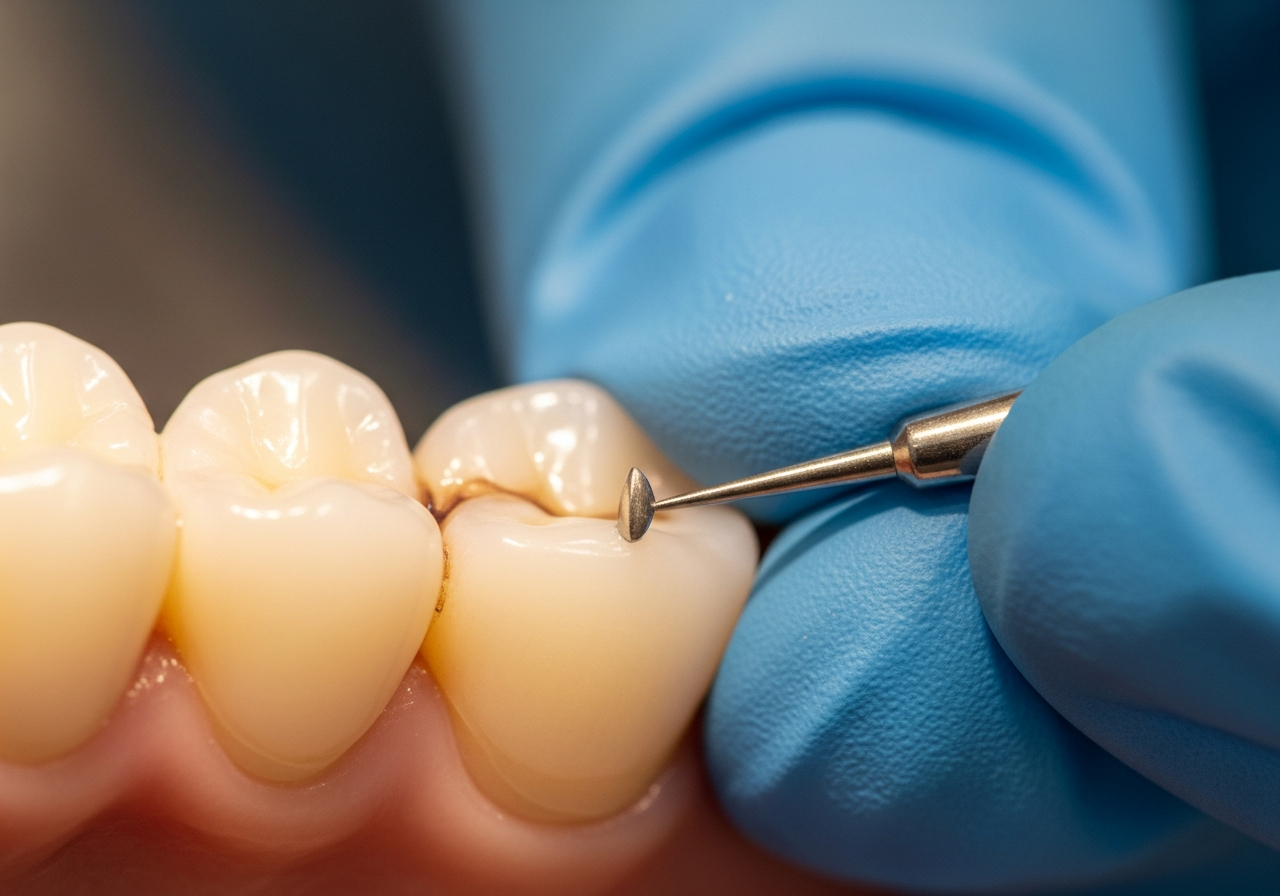
We place tooth-colored composite fillings that bond directly to your tooth, blend seamlessly, and require less removal of healthy enamel than traditional silver fillings.
Why tooth-colored fillings
Composite resin, the material used for tooth-colored fillings, has advanced dramatically over the past two decades. Today's formulations are durable enough for back-tooth restorations, bond directly to tooth structure, and require removing significantly less healthy enamel than traditional silver amalgam.
We use composite exclusively at Venetian Pointe Dentistry, not because silver fillings are dangerous, but because composite is simply the better material by every measure except initial cost.
Composite vs. amalgam
| Feature | Composite Resin (Tooth-Colored) | Amalgam (Silver) |
|---|---|---|
| Appearance | Matched to your tooth shade, invisible | Silver-gray; visible when you smile or laugh |
| Bond to tooth | Bonds directly to enamel and dentin | Mechanical, requires more healthy tooth removal |
| Tooth preparation | Minimal, removes only decayed tissue | Requires wider cavity to lock in the filling |
| Temperature sensitivity | Minimal thermal expansion | Expands and contracts with temperature; can stress tooth |
| Mercury content | None | ~50% mercury by weight |
| Lifespan | 7–10+ years with good oral hygiene | 10–15 years but may crack surrounding tooth over time |
The procedure
We identify all areas of decay with a visual exam, X-rays, and where appropriate, diagnostic dye. Then we match the composite resin to your exact tooth shade so the filling is invisible.
The tooth and surrounding gum are numbed completely. You should feel no pain during the procedure, only light pressure and vibration.
A dental drill or laser removes only the decayed tissue, preserving as much healthy tooth structure as possible. With composite, we never have to remove extra tooth to create retention.
The tooth surface is etched, primed, and bonded. Composite resin is placed in thin layers, each one hardened with a curing light before the next is added, creating a strong, integrated restoration.
We contour the filling to match your natural bite, check your occlusion, and polish the surface until it's smooth and indistinguishable from the surrounding enamel.
When to call us
Sensitivity to cold or sweets that wasn't present before (common for a few weeks post-filling)
Pain when biting, the filling may be slightly high and needs a bite adjustment
Visible cracks or chips in an existing filling
A rough edge or gap you can feel with your tongue
Filling has fallen out
Common questions
Composite fillings typically last 7–10 years, sometimes longer. But honestly, it depends on where it is, how you take care of your teeth, and whether you grind at night. We've seen patients get 15 years out of a composite when they're careful. We've also seen them fail in 3 if the patient is grinding on the filled side constantly. We check all your fillings at every recall visit.
Not unless there's a real reason. If the filling is intact and not cracking the surrounding tooth, it doesn't need to come out. We're not going to recommend elective removal just to charge you for it. If a filling is cracked, leaking, or the surrounding tooth is fracturing — that's a different conversation and we'll tell you clearly.
Yes, when done properly. The main concern with amalgam removal is mercury vapor during the drilling process. We follow safe removal protocols — proper isolation, high-volume suction — to minimize exposure. If you want your old silver fillings replaced, it's a straightforward conversation.
Cold sensitivity for a week or two is completely normal. The tooth is adjusting. If sensitivity worsens, becomes spontaneous, or turns into throbbing pain — call us. It can mean the decay was closer to the nerve than we could see on the X-ray, and the tooth may need a root canal.
Yes, all ages. Composite is actually ideal for kids — it bonds well, looks natural, and requires less removal of healthy tooth structure. We treat the whole family.
Service area
Schedule today
Call our office on Turkey Lake Road. We typically place composite fillings the same day as your examination when your schedule allows.